A Popular Question Most Beginners Misunderstand
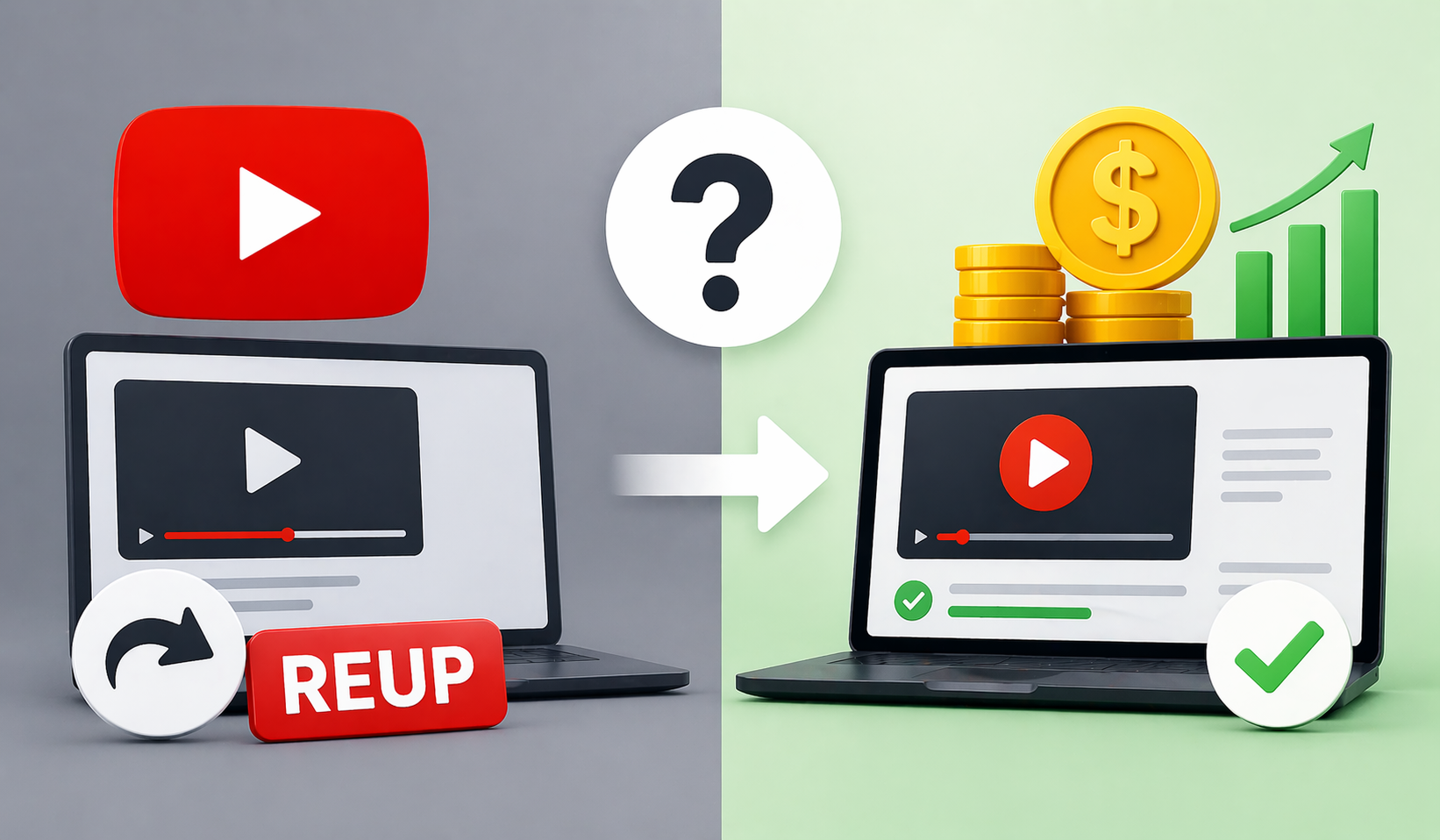
One of the most common questions in the MMO and content creation space is whether reuploading YouTube videos can actually generate income.
At first glance, the idea seems very attractive. Instead of creating content from scratch, you can simply find videos that are already performing well, download them, make minor edits, and upload them to your own channel.
This approach appears to save time, reduce effort, and eliminate the need to show your face or build a personal brand.
However, the reality is far more complex.
YouTube is not just a platform that rewards views. It is a system that evaluates originality, value, and user experience. Many channels that rely heavily on reuploaded content may get views, but struggle to generate revenue or sustain long-term growth.
👉 Reuploading can make money, but only if it is done correctly.
Understanding Reuploading: Copying vs Transforming Content
Not all forms of reuploading are the same.
Many beginners assume that reuploading simply means taking someone else’s video and posting it again. This approach carries high risk and almost no long-term potential.
On the other hand, there is a more advanced approach where existing content is used as raw material and then transformed into something new. This may involve adding commentary, restructuring the narrative, providing analysis, or combining multiple sources into a new format.
For example, simply reposting a viral clip offers no additional value. But using that same clip to explain a situation, tell a story, or provide insights creates a completely different experience for the viewer.
👉 The key difference lies in the new value you add to the content.
Does YouTube Allow Reuploaded Content?
YouTube does not operate on a simple “reupload or not” rule.
Instead, it evaluates content based on two main factors: copyright compliance and content originality.
A video may not receive a copyright strike but still fail to qualify for monetization. This is because YouTube’s monetization system looks beyond ownership and focuses on whether the content provides unique value.
Many creators misunderstand this distinction. Avoiding copyright issues does not automatically mean your channel is eligible for monetization.
👉 No copyright claim does not guarantee monetization approval.
Why Some Reupload Channels Get Views but Don’t Make Money
It is easy to assume that views equal income.
However, on YouTube, this is not always the case.
A channel may achieve high view counts, but if the content is classified as reused or lacking originality, it may not be eligible for monetization. This means the creator earns little to no revenue despite strong performance metrics.
YouTube evaluates the overall value of a channel, not just individual videos. It considers whether the content is repetitive, whether it offers a unique perspective, and whether viewers are receiving something new.
👉 Views alone are not enough—monetization requires originality and value.
What Is Reused Content and Why It Matters
Reused content refers to material that is taken from other sources without significant transformation or added value.
This is one of the most common reasons why channels are rejected from the YouTube Partner Program.
A channel can remain active and continue receiving views, but still be denied monetization because it does not meet YouTube’s standards for originality.
This is especially common in channels that rely heavily on compilations, simple edits, or aggregated content without commentary or analysis.
👉 Reused content is not just about copyright—it is about lack of creative contribution.
When Can Reuploading Actually Make Money?
Reuploading becomes viable when it evolves into content transformation.
This means that the final video must offer a different experience from the original source. It should provide additional context, explanation, storytelling, or a new perspective that enhances the viewer’s understanding.
For instance, taking multiple clips and turning them into a structured narrative with voiceover and analysis creates a much stronger case for monetization than simply combining clips without purpose.
Similarly, adding commentary, reviews, or educational insights can significantly increase the perceived value of the content.
👉 Reuploading can generate income only when it becomes original content in its own right.
High-Risk Reupload Practices to Avoid
Some methods of reuploading carry extremely high risk and should be avoided.
Reposting videos without any meaningful changes is the most obvious example. Even if minor edits are applied, the underlying content remains the same, making it easy for YouTube to detect duplication.
Another risky approach is creating compilations without adding commentary or structure. While these videos may gain traction initially, they often fail monetization checks.
Content involving copyrighted media such as movies, music, or sports footage is also particularly sensitive and likely to result in claims or restrictions.
👉 The less value you add, the higher the risk.
How to Reupload Content the Right Way
To approach reuploading safely and effectively, you need to shift your mindset from copying to creating.
Instead of viewing original videos as finished products, you should treat them as raw material. Your role is to reshape that material into something new.
Start by adding your own script. A clear narrative or explanation can transform the entire video. Voiceovers, whether recorded or AI-generated, provide context and help guide the viewer.
Next, restructure the content. Do not simply follow the original sequence. Organize clips in a way that supports your message or storytelling flow.
Finally, focus on editing. Use text, highlights, transitions, and visual cues to enhance clarity and engagement. Good editing is not just about aesthetics—it is about communication.
👉 Safe reuploading means turning existing content into a new experience.
Is Reuploading a Sustainable Long-Term Strategy?
Reuploading can be useful in the early stages of content creation. It allows you to explore trends, understand audience preferences, and test different formats quickly.
However, relying on reuploading as a long-term strategy can be limiting.
Since the content originates from external sources, your system depends on factors outside your control. Changes in copyright enforcement, platform policies, or content availability can disrupt your entire workflow.
A more sustainable approach is to use reuploading as a learning phase and gradually transition toward original or heavily transformed content.
👉 Reuploading is a stepping stone, not a long-term foundation.
Reupload vs Original Content: Which Should You Choose?
Reuploading offers speed and convenience, making it attractive for beginners.
Original content, while more demanding, provides greater control, stability, and long-term potential.
The most effective strategy often combines both approaches. You can analyze successful content, understand why it works, and then create improved versions with your own perspective.
👉 Do not copy what works—understand it, then build something better.
The Future of Reuploading on YouTube
As content creation becomes easier with AI tools, competition will continue to grow.
This means that low-effort reuploading will become less effective over time.
YouTube’s algorithm is increasingly focused on quality, engagement, and originality. Content that fails to meet these standards will struggle to gain visibility and monetization.
👉 The future belongs to creators who add value, not those who copy content.
Conclusion
Reuploading YouTube videos can generate income, but only when it is approached strategically.
Simply copying content may bring short-term views, but it rarely leads to sustainable growth or monetization.
The key is to transform, enhance, and reframe existing material into something new and valuable.
👉 YouTube does not pay for copying content—it pays for the value you create from it.