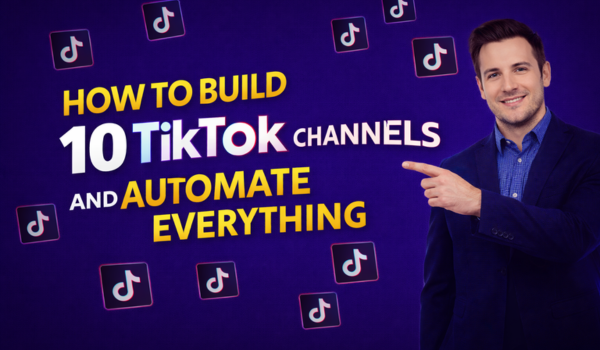
Why You Need Multiple TikTok Channels
When starting on TikTok, many people focus on building just one channel. While that approach isn’t wrong, it is becoming increasingly limited in the MMO landscape of 2026.
The reason is simple:
👉 TikTok is a probability-based platform
A viral video doesn’t always come from the “best” content, but from the right combination of:
- Audience insight
- Timing
- Format
If you only run one channel, you are relying on a single opportunity.
But if you manage 10 channels:
👉 You multiply your chances of success every single day
That’s why multi-channel systems are becoming the new standard.
The Right Mindset: Not 10 Channels, But One System
A common mistake is thinking:
👉 “10 channels = 10 times the workload”
In reality:
👉 10 channels are just outputs of a single content system
When your workflow is structured, adding more channels does not significantly increase your workload—it increases your output.
Step 1: Build a Content Strategy Before Creating Channels
Before creating any channels, you must answer one key question:
👉 What type of content will you produce?
A scalable system does not require 10 different ideas. Instead, you need:
- 1–2 main content formats
- High replication potential
- Easy scalability
Examples include:
- Storytelling
- Short educational content (finance, health, etc.)
- Curiosity-driven content
The key is:
👉 Your content must be scalable
Step 2: Set Up 10 TikTok Channels the Right Way
When creating multiple channels, you need to ensure:
- Each channel has a clear direction
- They are not completely identical
- They can operate independently
A smart structure could be:
- 3–4 main content channels
- 3–4 testing channels
- 2–3 backup channels
This helps:
👉 Reduce risk and increase flexibility
Step 3: Build a Content Production Workflow
This is the most critical part.
A standard workflow includes:
- Content research
- Script writing
- Video creation
- Caption optimization
- Publishing
Instead of working on videos individually, you should batch your work.
For example:
- 1 hour: create 10–20 scripts
- 1 hour: produce videos in bulk
👉 This dramatically improves efficiency
Step 4: Use AI to Speed Up the Process
AI can significantly reduce your workload by:
- Generating scripts
- Creating voiceovers
- Suggesting content ideas
What used to take hours can now be done in minutes.
👉 This allows you to maintain high output without burnout
Step 5: Automate Posting and Channel Management
Automation is what makes managing 10 channels realistic.
You can:
- Schedule posts in advance
- Manage multiple accounts simultaneously
- Track performance automatically
Once your system is set up:
👉 You no longer need to post manually
A Typical Workday Managing 10 Channels
With a proper system, you don’t need to spend all day working.
A typical workflow might look like:
- 1–2 hours: content creation
- 30 minutes: system check
- 30 minutes: data analysis
👉 Total: 2–3 hours per day
Common Mistakes When Running Multiple Channels
The biggest mistake is:
👉 Creating multiple channels without a system
This quickly leads to burnout.
Another mistake is:
👉 Posting identical content across channels
This can reduce reach and trigger platform restrictions.
A third mistake is:
👉 Not tracking performance
Without data, you cannot optimize.
Scaling Strategy: From 1 to 10 Channels
You should not start with 10 channels immediately.
Begin with 1–2 channels to identify what works.
Once you have successful content, start replicating.
Then gradually expand to 5–10 channels.
👉 Scale based on data, not assumptions
Risk Management for Multi-Channel Systems
When operating multiple channels, you must:
- Avoid spam behavior
- Avoid full reuploads
- Diversify content
Also, always have backups:
- Backup accounts
- Backup content
The Future: Multi-Channel Is the New Standard
In the coming years:
- Single-channel creators will be limited
- Multi-channel systems will dominate
A well-built system can scale from:
👉 10 channels → 50 channels → 100 channels
Conclusion
👉 You can absolutely create and manage 10 TikTok channels
But the key is not the number of channels.
The key is:
👉 Whether you have a system
In 2026, successful creators are not those who work the hardest, but those who:
- Use AI effectively
- Implement automation
- Scale intelligently